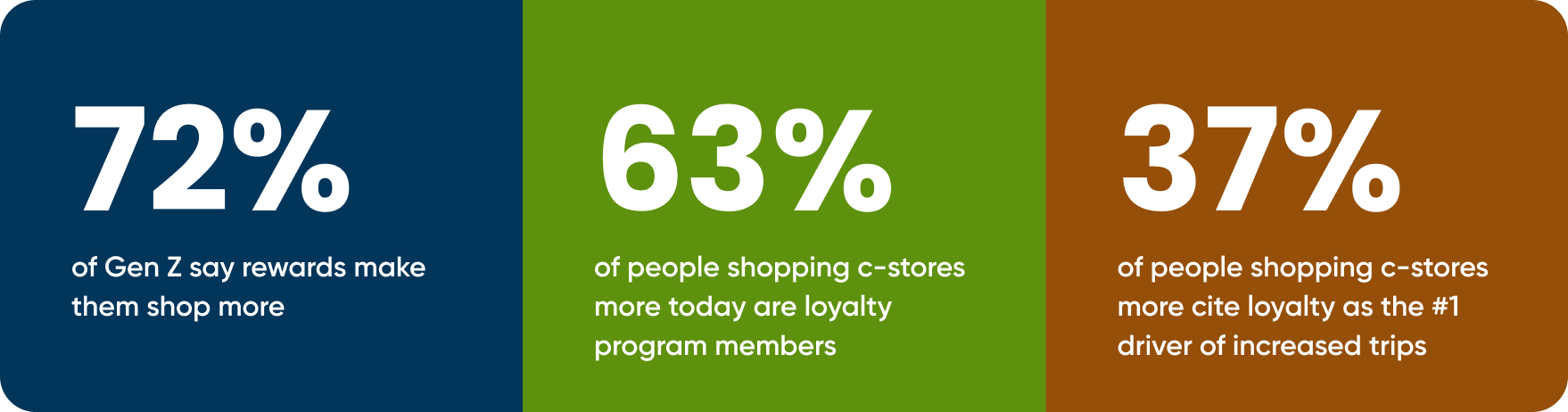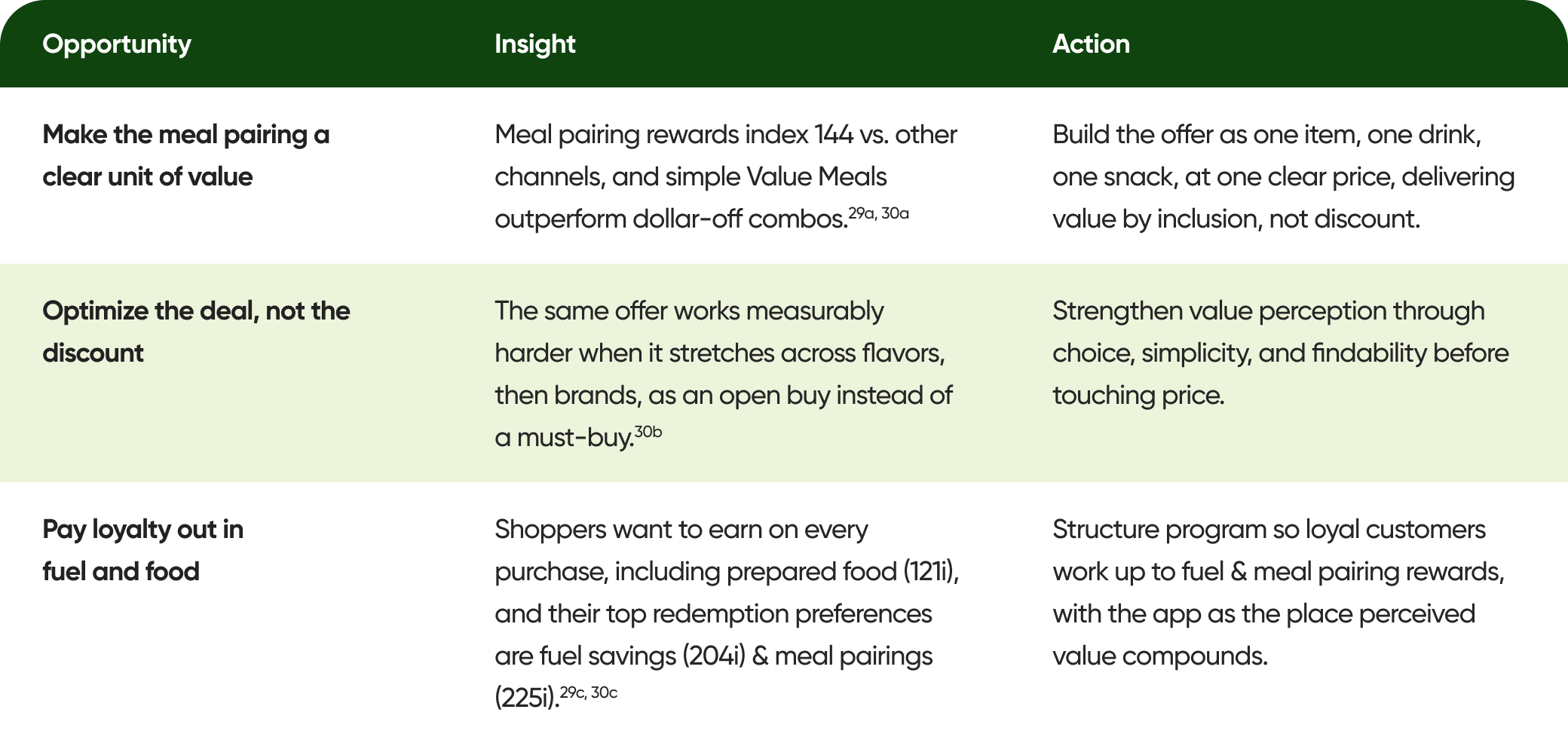
introduction
The convenience store (c-store) has weathered many storms and pioneered countless retail innovations since its inception almost a century ago. Yet, today, economic headwinds and the growth of online shopping are putting new pressure on c-stores (and most other brick and mortar outlets) in ways that can feel unprecedented.
As inflation and fuel costs make venturing out more costly and as digital delivery options promise to make convenience even faster and easier, c-stores find themselves having to confront a multitude of challenges at once. And in a world where four in five c-stores sell gas at a time when almost all households (92%) are looking to cut fuel spending, even the classic fill-up-plus-a-drink trip becomes challenged.1,2
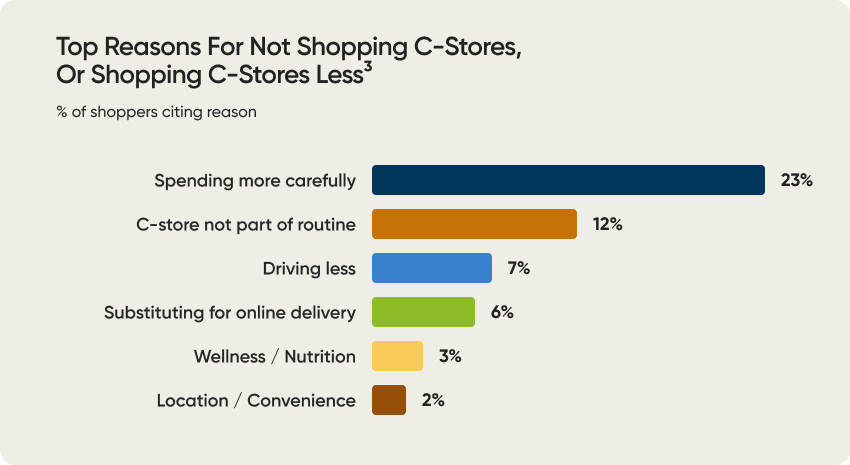
These pressures are real. But economic headwinds like inflation and fuel prices are cyclical. And the structural challenges posed by the rise of convenient, omnichannel shopping can be turned into an advantage by a channel born to always be only minutes away.
The answer, therefore, is not for the c-store to become something it was never meant to be. Rather, it's to extend the strengths the convenience channel was born to own, weather the cyclical headwinds, and let today's structural challenges power digital innovations that will carry the c-store into its next 100 years.
As always, it starts with what shoppers need. And there are four needs c-stores are uniquely positioned to deliver on - routine, discovery, ease, and perceived value.