
five trends redefining
how america shops
for groceries online
September 2026 • 8 min
introduction
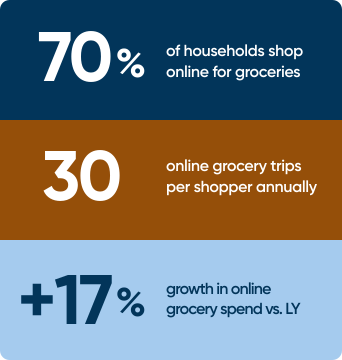
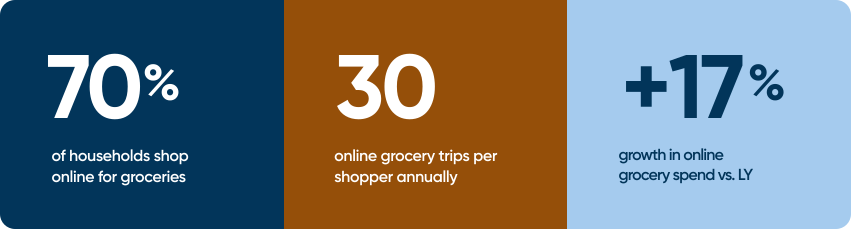
Seventy percent. That’s the number of U.S. households that shopped for groceries online at least once in the last year. While basket sizes held steady, shoppers made 30 online grocery trips annually, up 5 trips vs. a year ago, and annual online spending climbed a whopping +17% vs. LY to $1,241 per shopper.1 Shopping for groceries online has become the new normal. And that means the old grocery path to purchase is rapidly transforming.
Shoppers today are turning to shopping for groceries online for more than just time savings and convenience, increasingly relying on the channel as an essential money and life management tool. In an environment of ongoing financial pressures, digital is helping American shoppers stay organized, make more informed choices, and stick to a budget without sacrificing ease.
In this latest pepviz® installment, we reveal how shopping behaviors are rapidly evolving online, giving rise to five trends with the power to reshape the digital path to purchase as we know it:
- Online is part of a greater value equation, extending beyond convenience and price
- Memberships have evolved into digital planning tools, powering more holistic shopping plans
- Digital pre-shopping and mobile apps spark the imagination prior to checkout
- The homepage is now the #1 destination for discovery and “smart spontaneity”
- Reliability is becoming the primary driver of online loyalty
So, let’s go on a digital shopper journey from the drivers and pre-shopping decisions being made long before any given “trip” to post-shopping audits that turn successful fulfillment into the next order. Along the way, we’ll explore how these five trends are fundamentally changing the way America shops for groceries.

online is part of
a broader value equation
value now extends beyond convenience & price
By the end of Q2, grocery prices (83%), gas (78%), and utilities (63%) were the top contributors to financial pressure. As gas prices continue to fluctuate, delivery and online ordering are becoming increasingly practical ways to manage trip efficiency and control spending. Thirty-six percent of online shoppers now say ordering grocery delivery helps them save on gas, an increase of 12 points versus December 2025.2
Defining value online, therefore, has become more multidimensional. The prices of products sold online are often at parity with in-store prices, especially with price-match guarantees. That means additional fees and the cost of delivery are being weighed as part of a more expansive total-value proposition that accounts for the opportunity costs of fuel and time, the ability to realize savings through bulk and bundling, and the amortized value of annual membership program benefits.
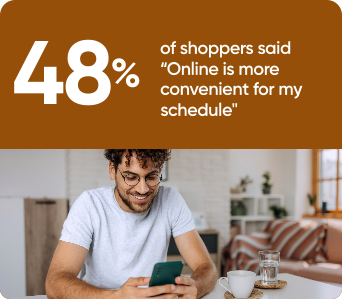
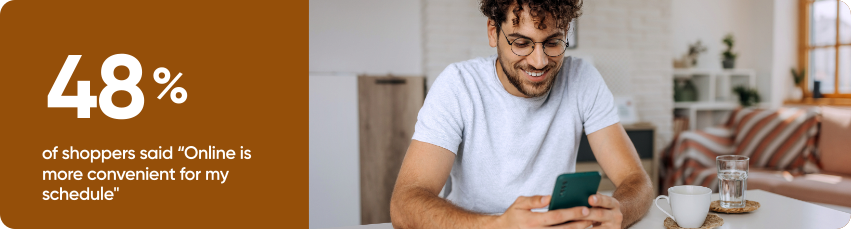
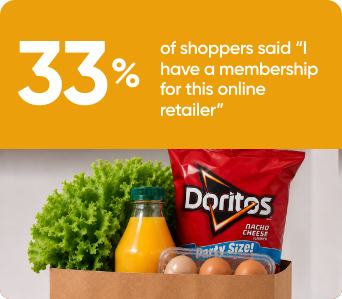
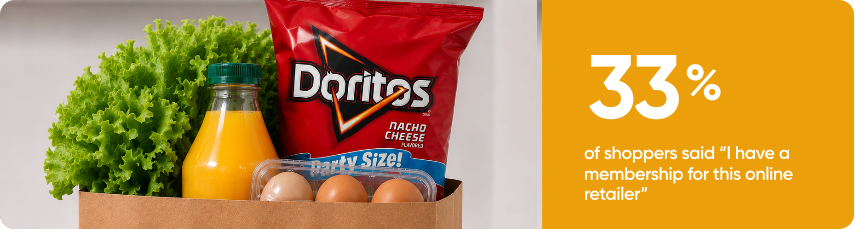
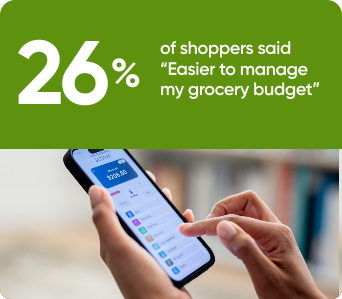
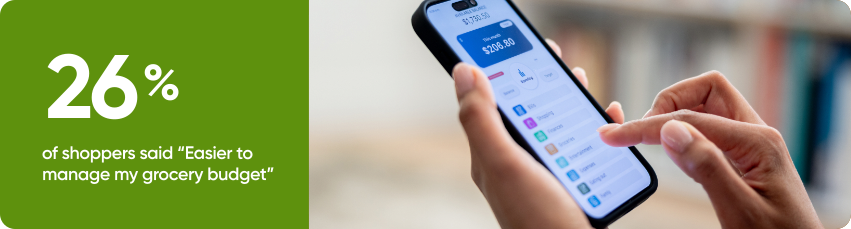
So, while convenience remains the leading reason to shop online (48%), membership benefits (33%) are now trending right behind it, with more than a quarter (26%) relying on online shopping, at least in part, to help manage their overall grocery spend.3
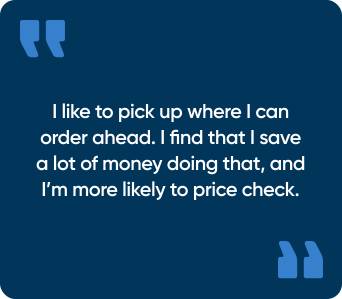
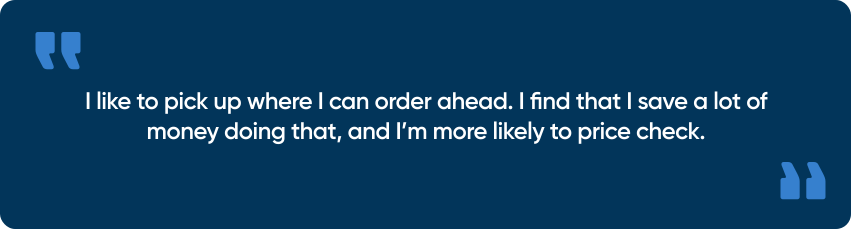
Online shopping is quietly becoming part of a household’s control panel: a place to manage spend, compare, and plan beyond what’s inside the cart.
Implication for retailers:- Reframe online from “fast and convenient” to “total value” (i.e., inclusive of fees, fuel, time, and other savings per trip).
- Surface running totals, savings counters, and apples-to-apples price-per-unit comparisons to become a planning tool beyond each individual basket.
- Personalize marketing communications and target promotions to convey this more expansive view of value beyond price.
memberships evolve into
digital planning tools
shoppers combine perks, price comparison, & deal-seeking into one plan
More than half of online shoppers say inflation is impacting them, and 90% are actively changing how they buy. They’re comparing prices across retailers, looking for promo codes, and shopping more often at value or discount stores.4 And they’re increasingly turning to their online memberships and purchase histories to make sense of it all.
In fact, 30% of online shoppers say they find value online specifically through retailer memberships and loyalty programs. That’s up eight points vs. December 2025. Shoppers explicitly link memberships to tracking total spend more easily and membership perks like free delivery or shipping to savings on gas and time.5
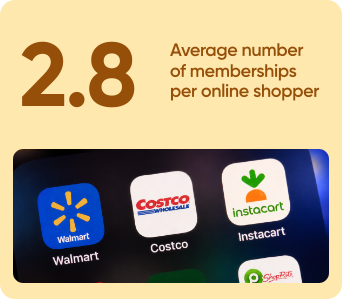
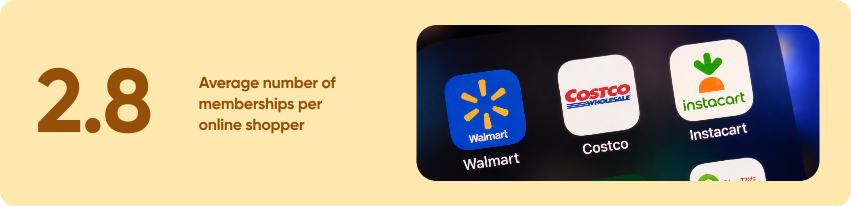
And the most important insight? Online shoppers now hold an average of 2.8 memberships, with 59% maintaining multiple subscriptions for distinct perks, and 55% for access to different retailer assortments that fit their needs.6
For example, some may use Walmart+ for stock-up runs, Costco for bulk trips, and Instacart+ when they want flexibility across retailers. The choice depends not just on what they’re buying that day, but the mosaic of needs they have over increasingly longer planning horizons. There’s a real tension here, though. As multiple memberships make comparisons more complex, hidden fees or unclear delivery pricing can undermine perceived value, or worse erode trust, especially among cohorts like Gen Z who are more budget-conscious.7
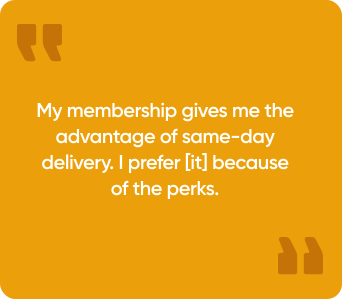

Shoppers are using memberships and their perks as key factors in their overall shopping strategy.
Implication for retailers:- Be transparent about fees. Pricing parity, free delivery, and progress bars can build loyalty and help streamline planning.
- Design for stacking. Become the go-to membership for the right reasons in a typical three-membership household.
- Make value clear at every decision point and across offers like BOGOs for clear and simple comparisons.
digital pre-shopping
ignites the imagination
apps blur the line between browsing & buying
In the digital path-to-purchase, pre-shop is where inspiration peaks. It’s the phase when attention and mental focus are highest, when the list gets built, and when decisions get locked in. The behavioral proof is clear: 98% of online grocery shoppers do at least one preparatory action before they start shopping.8
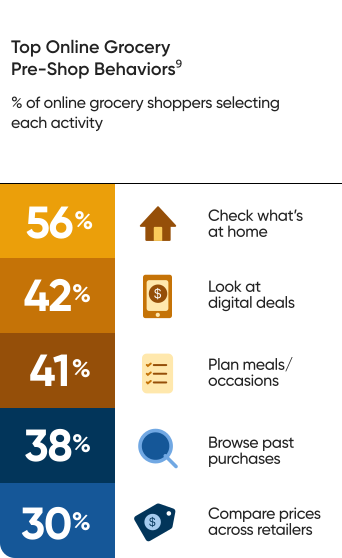
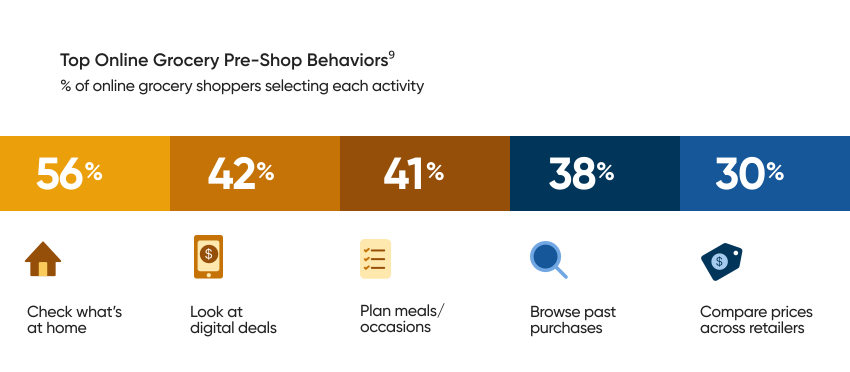
That planning extends past the digital basket. The single biggest pre-shop lever influencing in-store purchases is the retailer mobile app. Shoppers recall turning to mobile apps in 13% of all pre-shop-influenced purchases, outperforming mailed circulars, TV/streaming/YouTube ads, retailer site banner ads, and social media ads.10 Retailer apps are also doing double duty here, shaping both the online basket and the in-store trip that follows.
Gen Z amplifies this pre-shopping opportunity. While 76% of Gen Z online grocery shoppers browse discovery and explore pages while shopping, these digital natives look to social media for inspiration pre-shop.11
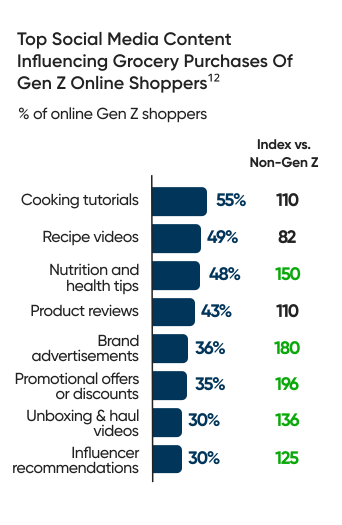
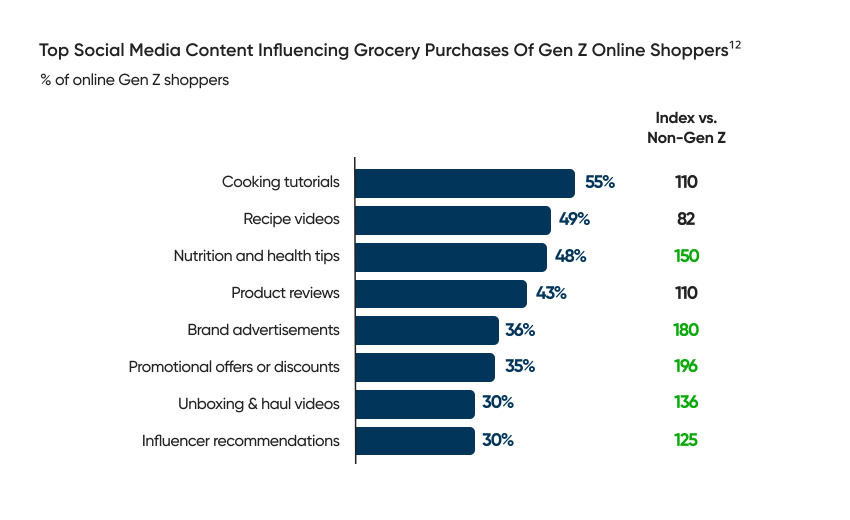
Social media plays a major role in Gen Z’s grocery decisions, with 48% actively leveraging it along their path to purchase. TikTok leads as the #1 source of inspiration (66%, 132i), followed by Instagram (61%, 133i). Notably, 44% of online Gen Z shoppers have purchased a food & beverage item from TikTok Shop (151 index vs. non-Gen Z online shoppers).13 For this cohort, pre-shop is rooted in exploration, and retailers that show up early with relevant inspiration stand a better chance of winning with these younger shoppers.
Shoppers are seeking inspiration before they click “add to cart,” so spark their imagination during these key planning moments.
Implication for retailers:- Invest in planning tools. Think saved lists, recurring orders, past-purchase views, and shoppable meal plans.
- Build for cross-trip influence. Pre-shop activity in retailer apps shapes the in-store trip that follows.
- Bring inspiration to Gen Z early. Surface content that mirrors what inspires them on social – from how-to and recipe moments to credible reviews – helping turn browsing into basket adds.
the homepage is #1
destination for discovery
where curiosity turns into “smart spontaneity”
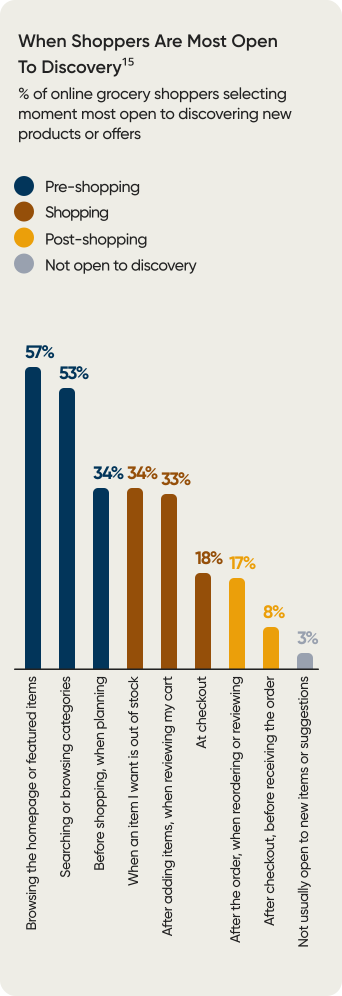
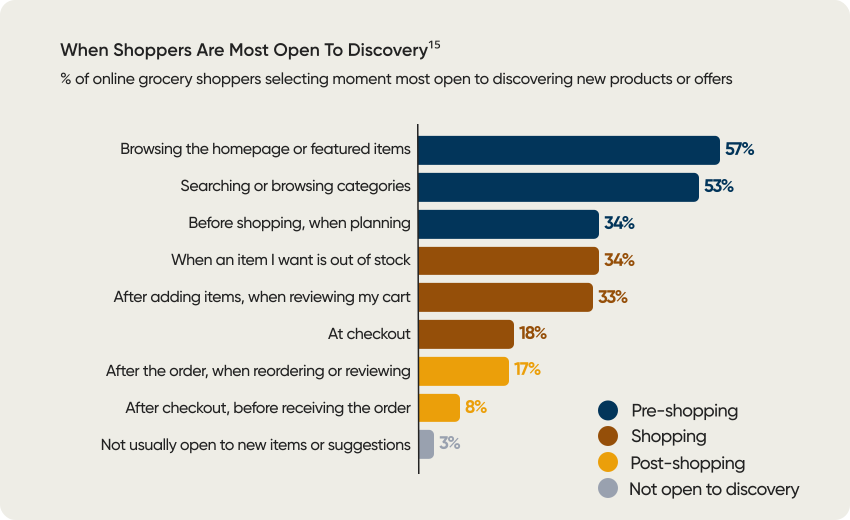
Discovery in online grocery clusters around predictable moments. Fifty-seven percent of online grocery shoppers say they’re most open to discovering new products or offers while browsing the homepage or featured items, and 53% say the same about searching or browsing categories. Openness drops sharply by checkout, so the homepage becomes the digital equivalent of the front-of-store endcap, except now every shopper sees it, and it can be personalized for each one.14
During-shop, behavior shifts toward goal- and value-driven activity, but spontaneity persists. Shoppers will add a snack or beverage they hadn't planned to buy, particularly when the addition feels justified (e.g., a clear deal, a familiar brand, reaching a free delivery threshold, or achieving other perceived total-trip wins). This reflects the principle of “smart spontaneity” - unplanned purchases shoppers can frame as intentional, thoughtful, and financially responsible.16
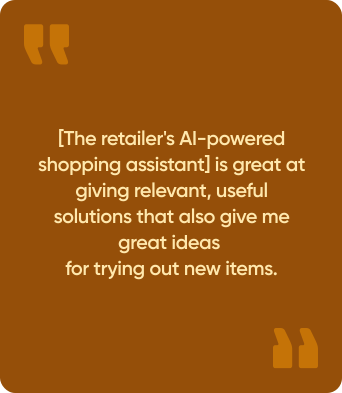
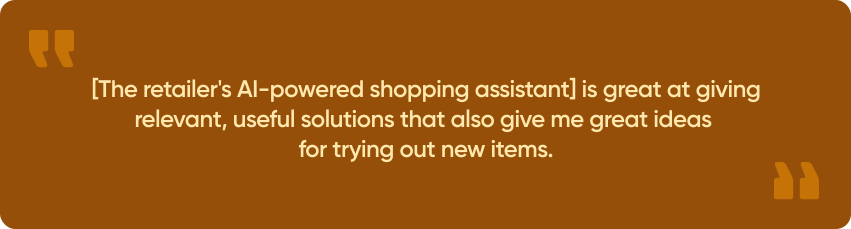
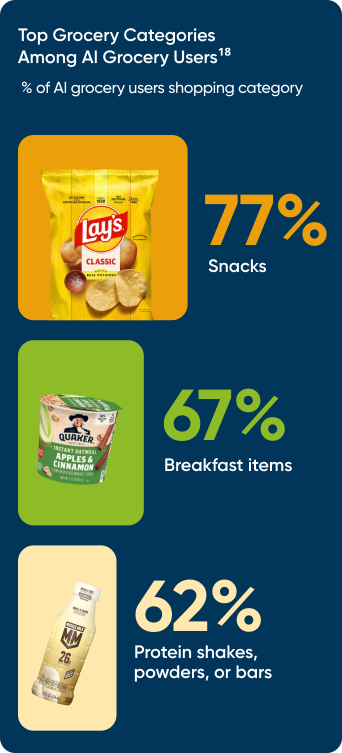
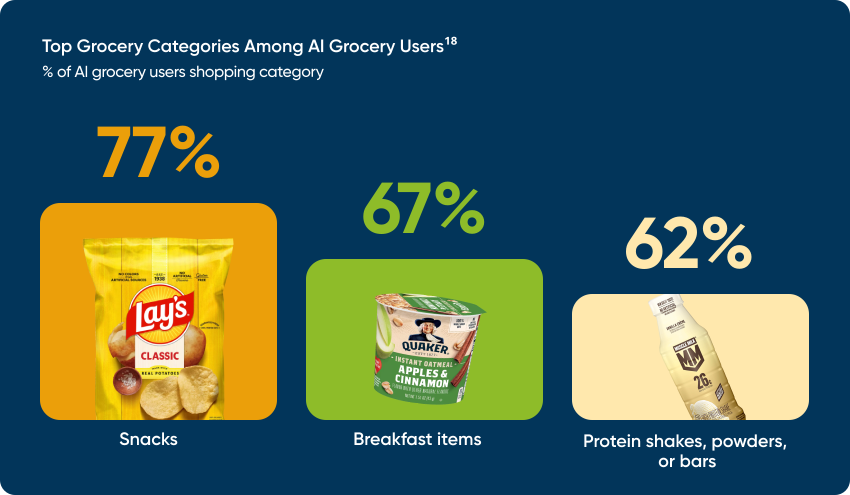
Online grocery has also officially entered the AI era as shoppers increasingly look to make smarter, more deliberate choices. AI tools that improve speed, ease, and discovery are reshaping how shoppers navigate the digital aisle. Today, 63% of AI grocery tool users rely on smart search or chat-based shopping assistants to discover products through prompts like "find me high-protein snacks." Millennials are leading adoption, over-indexing (121i) on AI-led grocery shopping vs. the average shopper, and more than half of shoppers agree that retailers using AI deliver a better overall shopping experience.17
The bar for the user interface is rising too. The single most-cited important attribute when shopping online is easy app or website functionality at 43%, with easy homepage navigation being key. More than one out of every five online shoppers explicitly explore items on the homepage.19
The homepage is where curiosity is highest and where retailers can trigger smart spontaneity.
Implication for retailers:- Treat the homepage as the most valuable advertising space in the store. Personalize hero placements and rotate generic content less.
- Engineer for smart spontaneity. Bundles, multi-pack savings, and “add this and unlock free delivery” enable guilt-free, incremental purchases.
- Get product data ready for AI mediation. Clean attributes, dietary tags, accurate pack format, and honest imagery are now machine-facing assets.
reliability drives
online loyalty
loyalty is built on constantly getting it right
Unpredictability is the ultimate pain point, and the friction points of online grocery fuel it. Out-of-stocks with no good substitute offered, unwanted forced replacements, delivery times that take too long, excessive scrolling to find what’s needed, and too many suggestions unrelated to what the shopper is buying conspire to increase friction and undermine trust. Pre-shop challenges add to the list, including slow, hard-to-use sites and apps, missing filters for dietary needs and pack formats, and overly similar product listings that create shopper confusion.20
Online loyalty is built through accuracy, fulfilled orders, honest imagery, clear pricing, and transparent communications. Because after checkout, the journey transitions into a phase of validation and future planning.
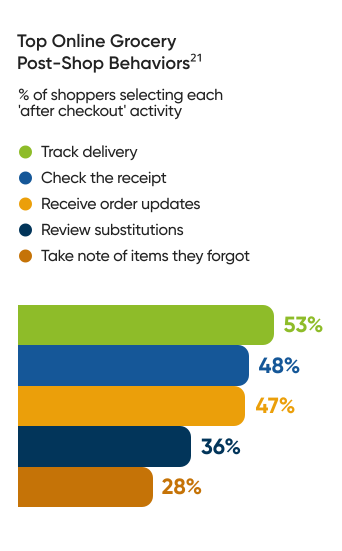
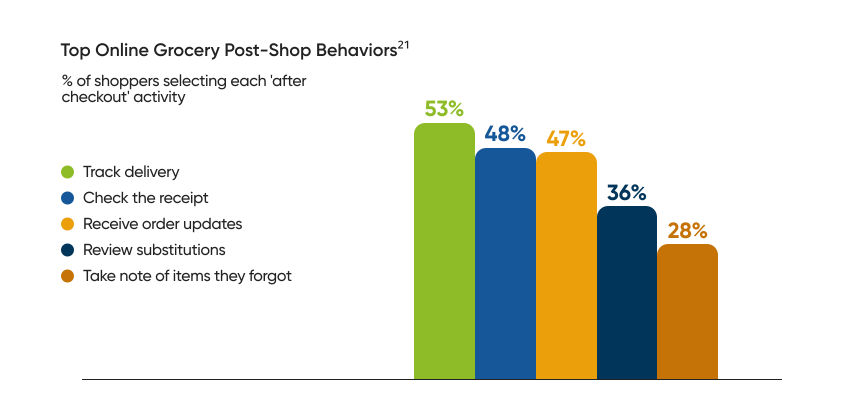
With price variability and substitutions complicating budgeting, shoppers are increasingly relying on post-checkout audits – from reviewing receipts to checking for missing items – to validate final costs and ensure order accuracy. Twenty-six percent of online shoppers continue to suspect that fees and delivery pricing make online more expensive than in-store, with Gen Z being the cohort most sensitive to hidden costs.22, 23 When every dollar matters, nothing demonstrates customer care more efficiently than transparent pricing and consistent delivery.
The retailers that reduce friction and uncertainty to deliver reliably will win loyalty and repeat orders.
Implication for retailers:- Prioritize inventory accuracy. Every unsurfaced out-of-stock becomes a substitution problem and a trust problem (and an “I have two other memberships to fall back on next time” problem).
- Build trust-based substitutions. Logic that takes into account brands, pack sizes, and purchase history (and asks before imposing) turns friction into a service moment.
- Treat post-shop communication as part of the experience. Tracking, substitution explanations, and recovery credits can become top retention tools.
key takeaways
Shoppers in 2026 are coming online seeking both value and inspiration. They’re stacking memberships and deals to make the math work. They’re doing more pre-shop planning and expect the homepage to help them discover. And they increasingly judge the whole experience by what happens after checkout. These five major trends are rewriting the rules of the road, creating continuous, increasingly non-linear, and ultimately new kinds of shopper journeys defined by new experiences.
- Online has earned its value credentials. Position online ordering, delivery, and pickup options as part of a total-trip value story.
- Memberships are now an important factor in deciding where to shop. Aim to be the go-to membership in a typical three-membership household.
- Pre-shop planning is the hidden engine. Invest in saved lists, past-purchase views, and personalized inspiration.
- The homepage is the highest-value real estate for discovery in online grocery. Optimize it to create moments of smart spontaneity.
- Reliability drives loyalty. Inventory accuracy, smart substitutions, and post-shop communication determine who returns.

actionable insights
driving growth
Online shopping’s next era belongs to the players who help shoppers feel smart, in control, and confident from planning to fulfillment. Together we’ll keep using data & insights to help create more successful and delightful online shopper experiences. Reach out to your PepsiCo representative to continue the conversation.

- PepsiCo North America Insights & Intelligence, Digital Commerce Insights, “Online Grocery Tracker,” June 2026; Circana Complete Consumer Panel Data, Latest 52 Weeks Ending June 14, 2026
- PepsiCo North America Insights & Intelligence, Digital Commerce Insights, “Online Grocery Tracker,” June 2026
- PepsiCo North America Insights & Intelligence, Digital Commerce Insights, “Online Grocery Tracker,” June 2026
- PepsiCo North America Insights & Intelligence, Digital Commerce Insights, “Online Grocery Tracker,” June 2026
- PepsiCo North America Insights & Intelligence, Digital Commerce Insights, “Online Grocery Tracker,” June 2026
- PepsiCo North America Insights & Intelligence, Digital Commerce Insights, “Shopper Retention Framework – The Role Of Paid Grocery Memberships,” June 2025
- PepsiCo North America Insights & Intelligence, Digital Commerce Insights, “Gen Z Online Shopper,” March 2026
- PepsiCo North America Insights & Intelligence, Digital Commerce Insights, “Digital Path To Purchase,” December 2025
- PepsiCo North America Insights & Intelligence, Digital Commerce Insights, “Digital Path To Purchase,” December 2025
- PepsiCo, “Impact Of Marketing Levers On Shopper Purchase Decisions,” February 2023
- PepsiCo North America Insights & Intelligence, Digital Commerce Insights, “Gen Z Online Shopper,” March 2026
- PepsiCo North America Insights & Intelligence, Digital Commerce Insights, “Gen Z Online Shopper,” March 2026
- PepsiCo North America Insights & Intelligence, Digital Commerce Insights, “Gen Z Online Shopper,” March 2026
- PepsiCo North America Insights & Intelligence, Digital Commerce Insights, “Digital Path To Purchase,” December 2025
- PepsiCo North America Insights & Intelligence, Digital Commerce Insights, “Digital Path To Purchase,” December 2025
- PepsiCo North America Insights & Intelligence, Digital Commerce Insights, “Digital Path To Purchase,” December 2025
- PepsiCo North America Insights & Intelligence, Digital Commerce Insights, “The Role Of Agentic AI Within Grocery,” November 2025
- PepsiCo North America Insights & Intelligence, Digital Commerce Insights, “The Role Of Agentic AI Within Grocery,” November 2025
- PepsiCo North America Insights & Intelligence, Digital Commerce Insights, “Online Grocery Tracker,” June 2026
- PepsiCo North America Insights & Intelligence, Digital Commerce Insights, “Digital Path To Purchase,” December 2025
- PepsiCo North America Insights & Intelligence, Digital Commerce Insights, “Digital Path To Purchase,” December 2025
- PepsiCo North America Insights & Intelligence, Digital Commerce Insights, “Online Grocery Tracker,” June 2026
- PepsiCo North America Insights & Intelligence, Digital Commerce Insights, “Gen Z Online Shopper,” March 2026