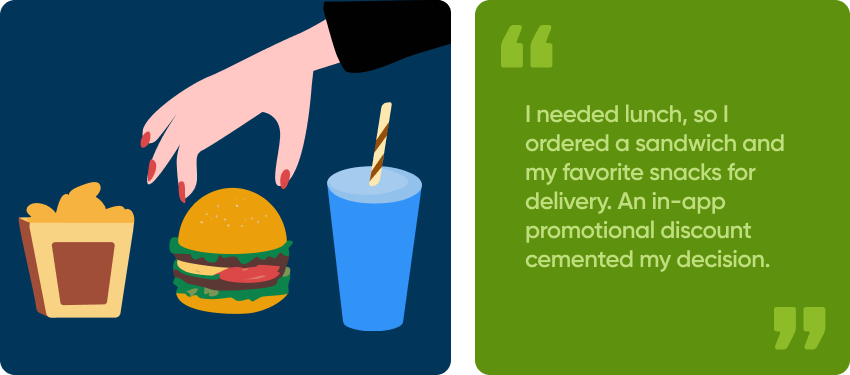
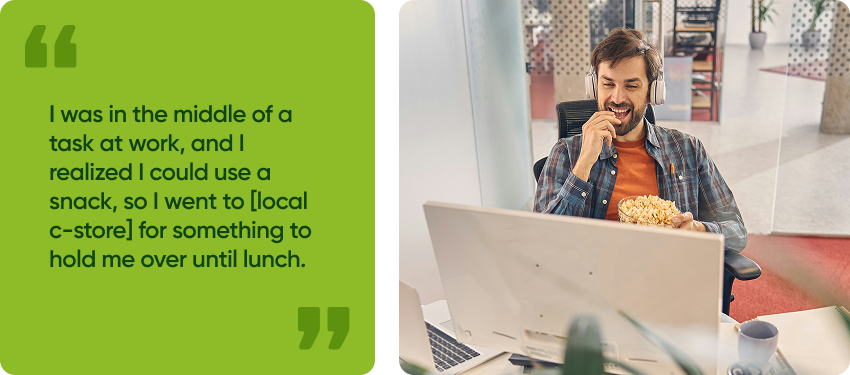
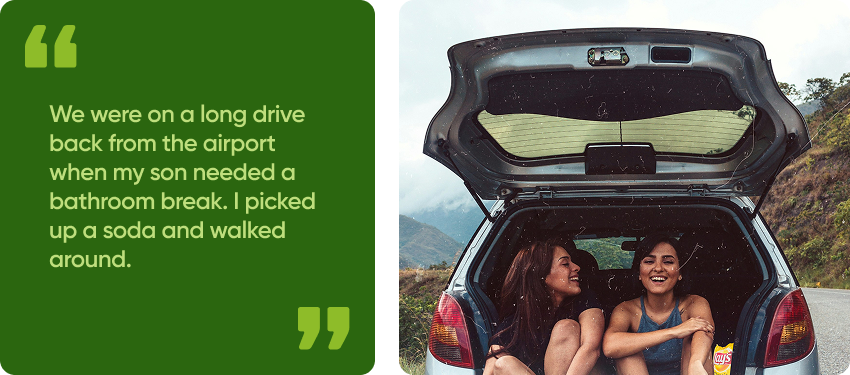
Of course, every shopper will display many of these needs at some point, engaging in many different trips. Conversely, no store serves just one need, but a constellation of needs in different mixes. Viewed together they reveal the hidden picture behind any given store’s mix of trips.
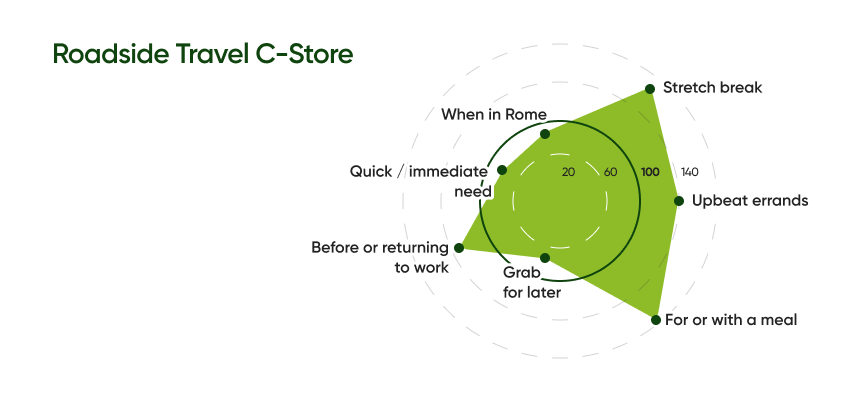
Typical Roadside Travel C-Store
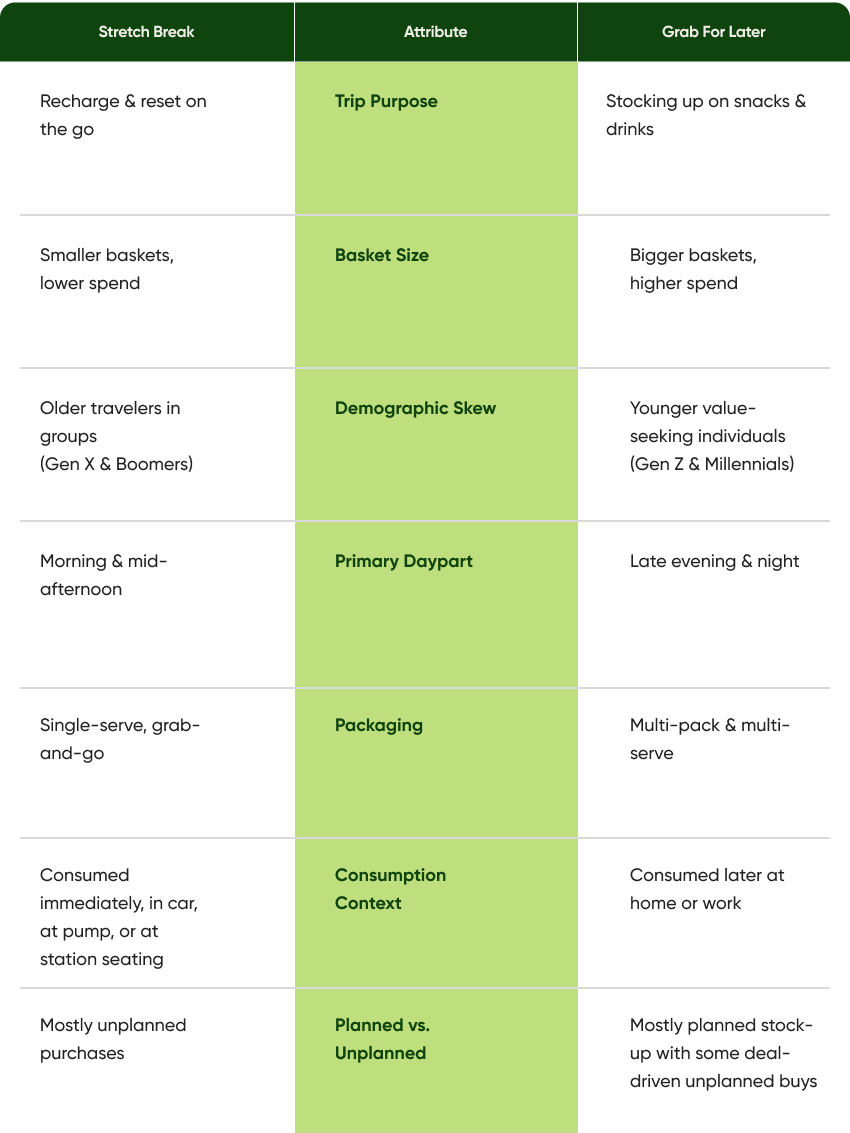
For example, looking at a typical roadside c-store serving primarily travelers, we can see that, as we may expect, it significantly over-indexes on Stretch Break (155 index). But it’s also the place where For or With a Meal shows up in even greater force (I49 index). If you’re looking for Grab for Later shoppers , on the other hand, it’s less likely you’ll find them here (70 index).
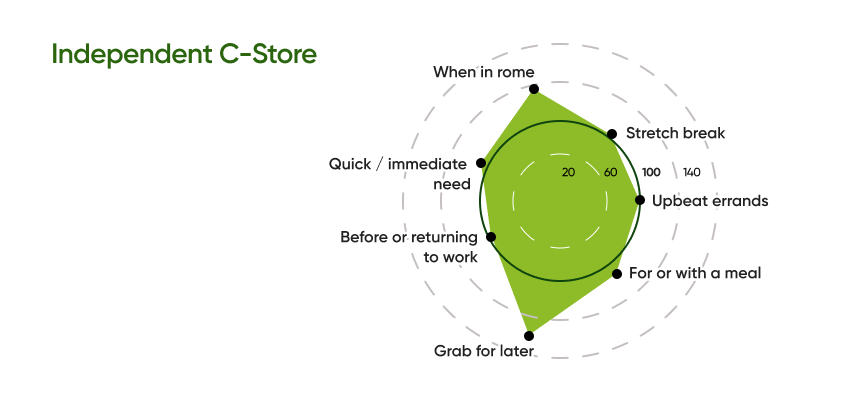
Typical Independent C-Store
Conversely, your typical “independent” c-store, like a bodega, is the place to Grab for Later (155 index). But less so for more “on the go” and “in between” occasions like rest stops, running errands, or popping in before or after work (all near or under 100 index).
Then again - and this is perhaps the most important point - the variation within a type of channel like “independent” can itself be very wide. Few c-store chains or individual stores are “typical” so an urban bodega near high-density office space vs. a suburban independent near a university might attract very different mixes of shopper needs.
We can realize the full power of this segmentation when we look at the relative mix of these seven shopper segments across real world stores. Combining our custom c-store shopper segmentation data with our proprietary database of consumer data from over 100 million households (ConsumerDNA) and insights from over 500,000 retail partners (StoreDNA) we can arrive at a higher resolution understanding of shopper needs across many different c-store locations.